The system
Five rules. Every module fits every other.
A marble run is usually a pile of parts that happen to fit. Round One is a system: five rules decide where every part sits, how high it stands, and how fast the marble arrives. Learn the rules once and you can build any run, including ones nobody has built yet.
Rule 1
One grid
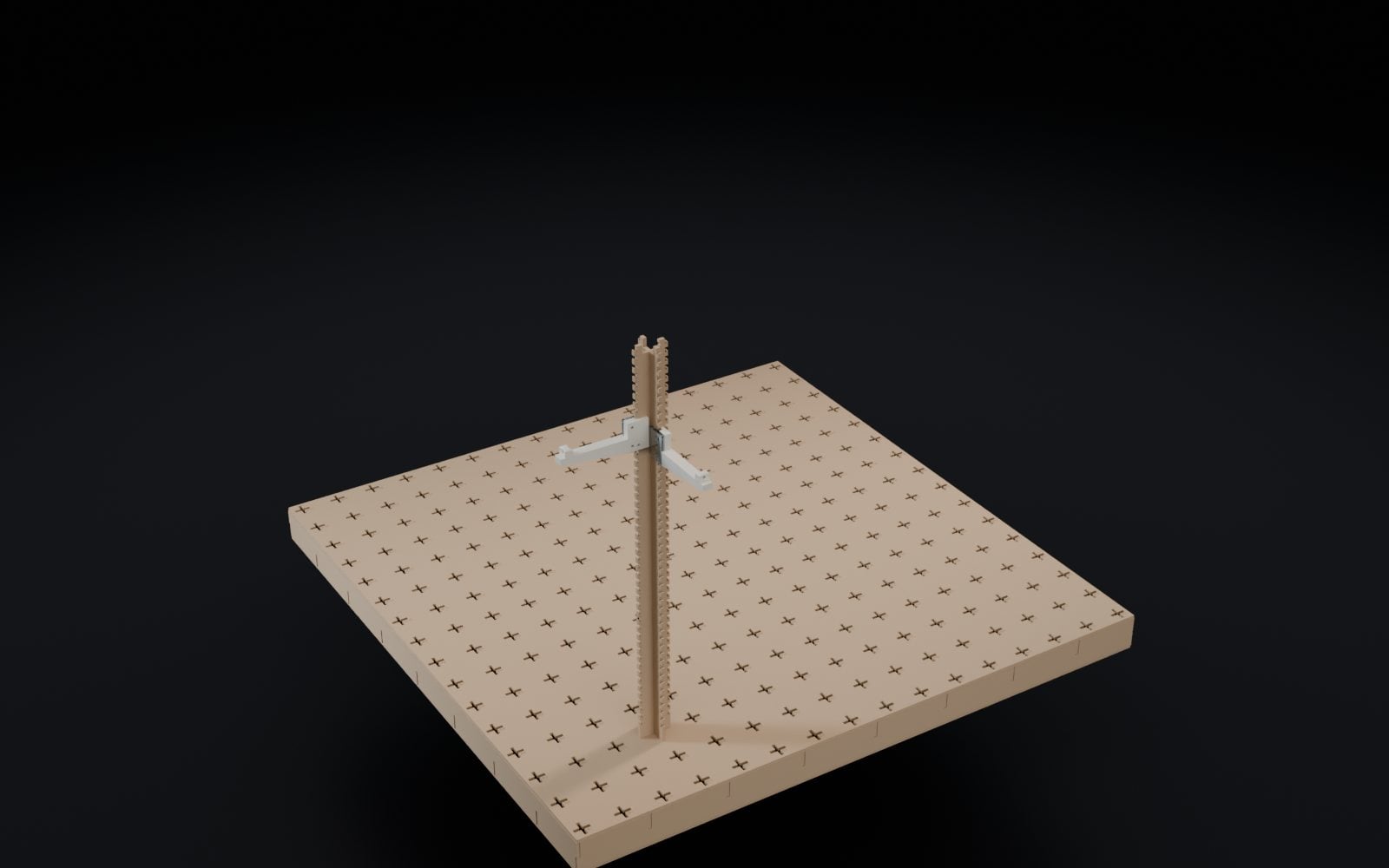
The base plate carries slots every 50 mm, 16 by 16 on the Round One plate, 256 in all. Each slot has its name engraved next to it, A1 to P16, so a run can be written down on a sheet of paper and rebuilt from it.
Plates come in three sizes and join at the edges with a cross-shaped bridge. The grid runs on across the joint.
Rule 2
One joint
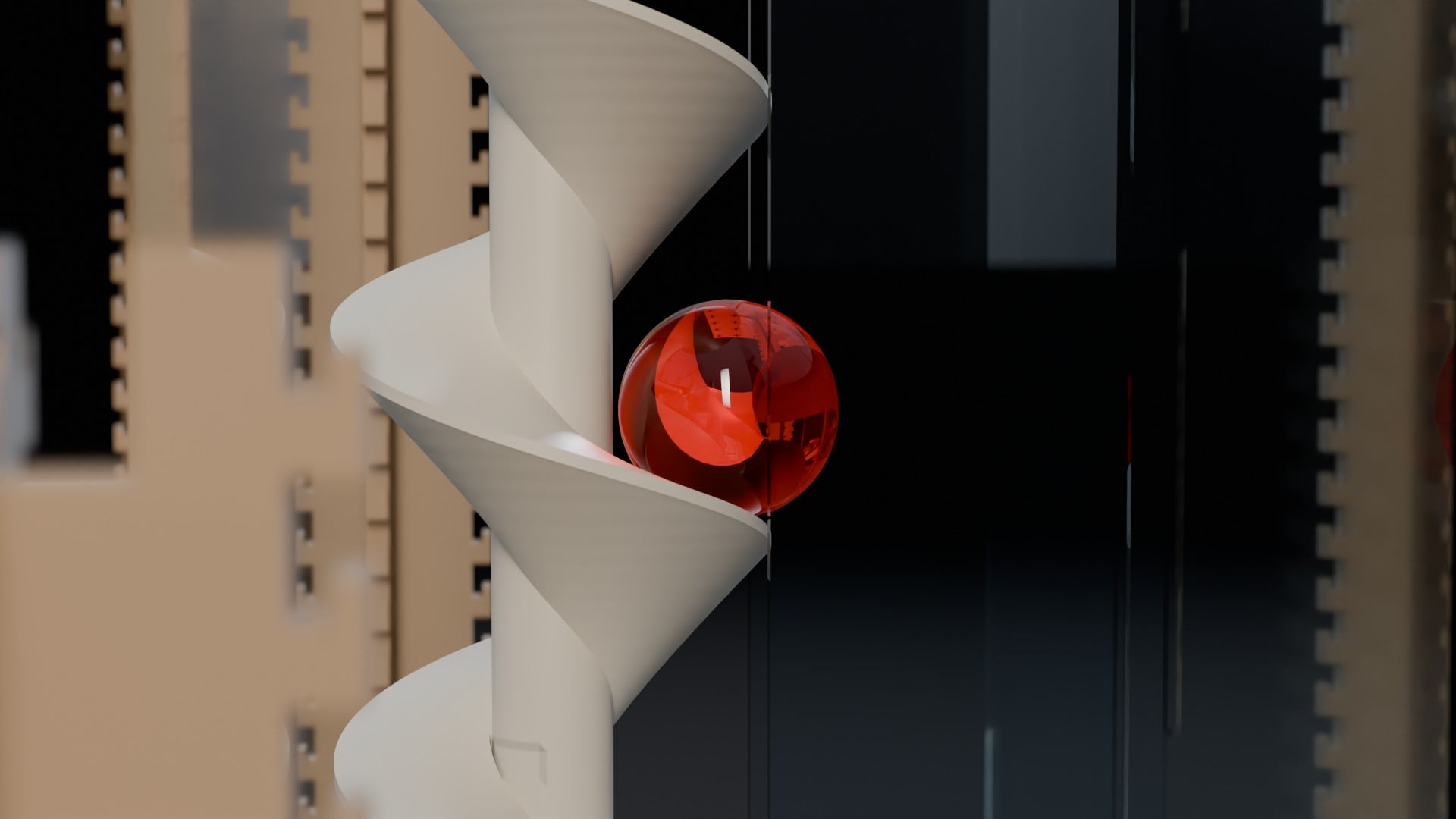
Every module has the same keel underneath, a double dovetail. Every arm has the same pocket on top. Drop the module in from above and it sits; lift it straight up and it comes out, and no neighbour moves.
Posts hook arms at any height in 5 mm teeth, the height is engraved on the post. Posts drop into the plate with a cross-shaped plug and a key that locks the direction.
Rule 3
One slope
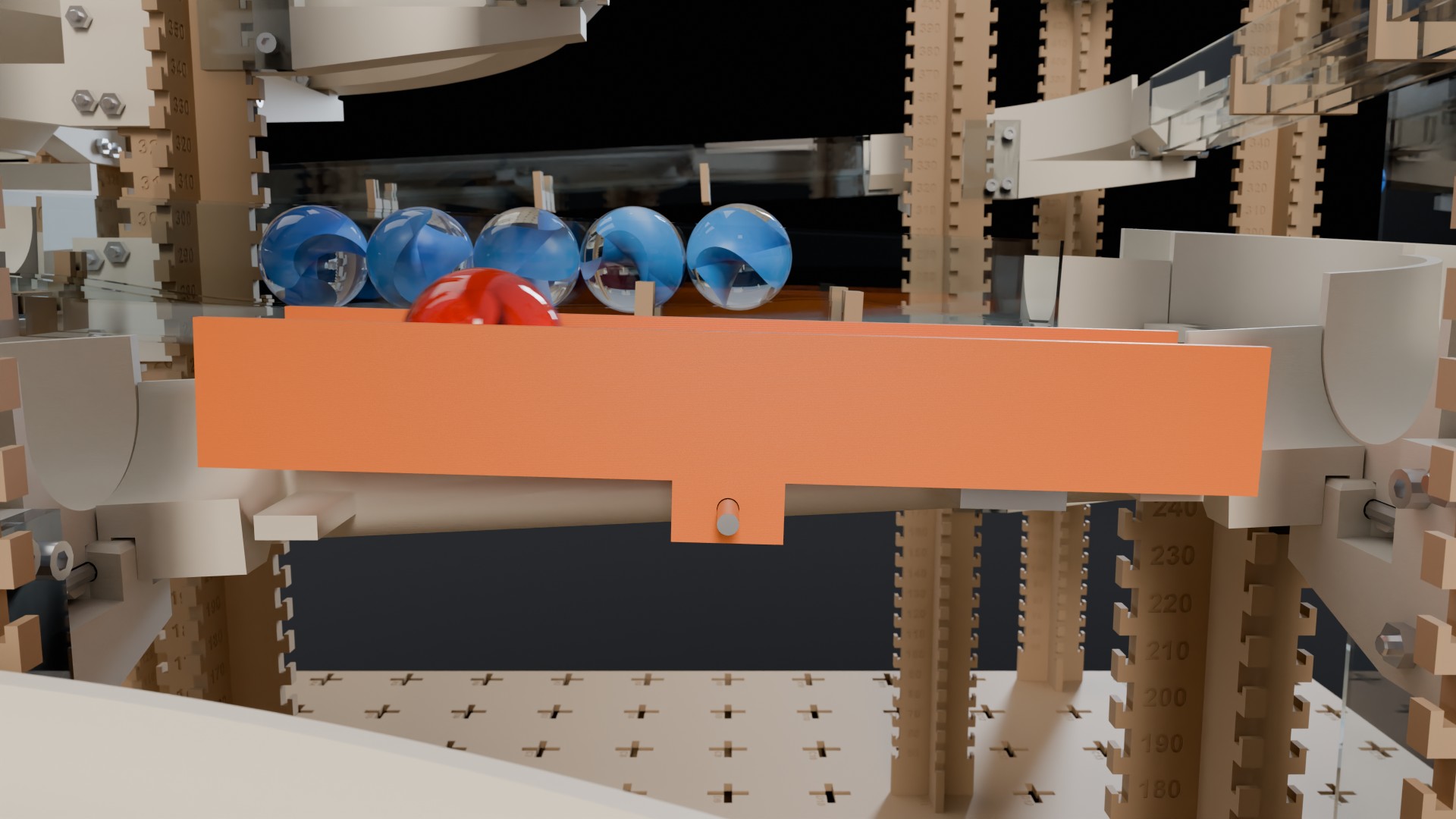
Every straight, curve and switch falls 5 %, 5 mm per grid step. A module that spans four steps ends 20 mm lower than it began. Heights add up without a calculator: count the steps, read the post.
Why 5 %: test series 1 checks the smallest slope on which a 25 mm glass marble starts rolling from rest. If 3.5 % is enough, 5 % leaves room for a slow module like the seesaw.
Rule 4
One step down
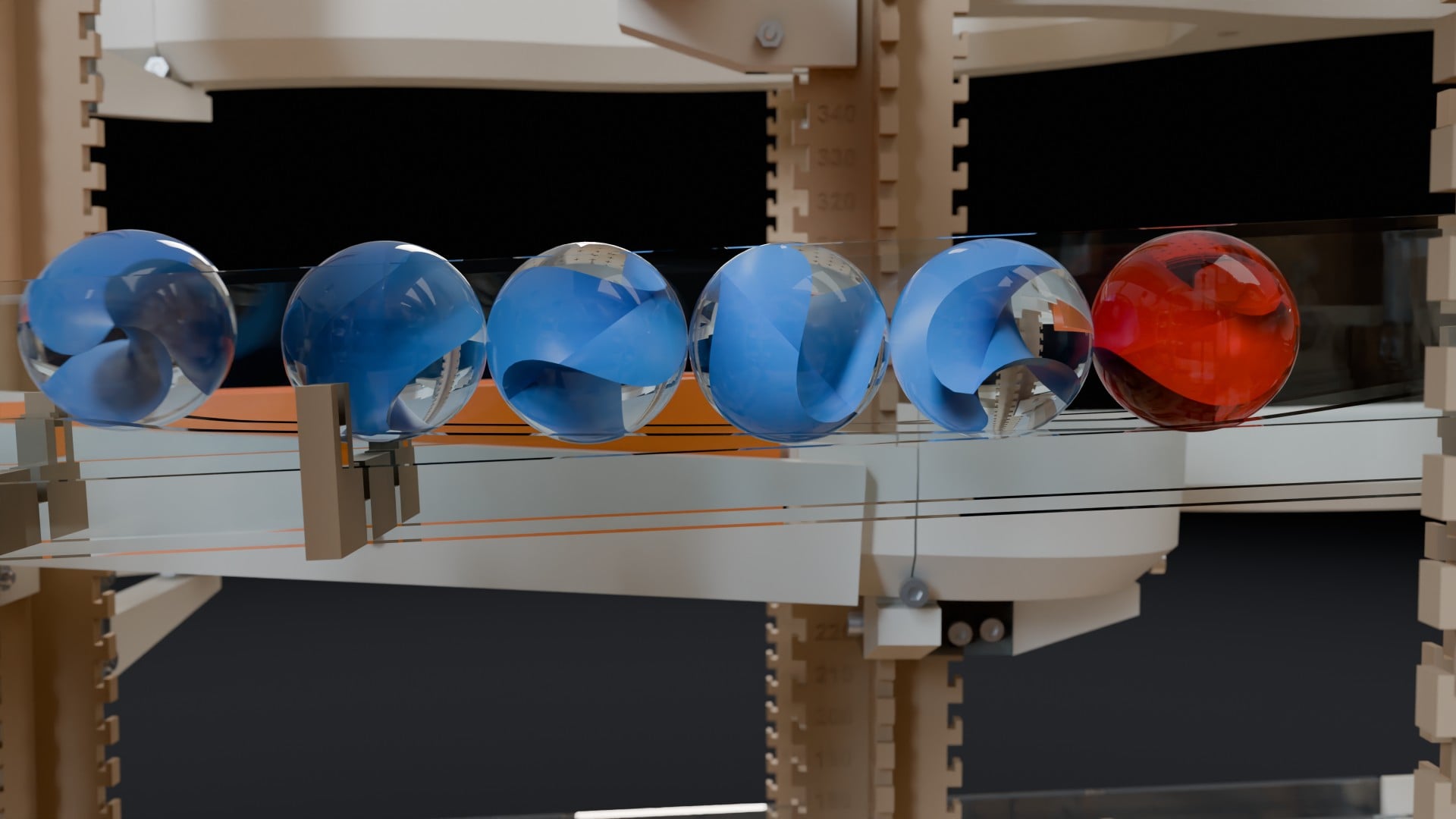
At every joint the floor drops 0.4 mm. Printers are not perfect; a joint that is 0.2 mm off still never presents an edge the marble has to climb. The marble loses almost nothing, test series 1 measures how much.
Curves are steeper at their ends than in the middle, so their joints keep the step as well.
Rule 5
Two machines
Everything that is not a marble, a motor or a screw comes from one of two machines. Printed parts fit a 300 x 200 x 200 mm bed, PLA, no supports. Flat parts come off a laser from 4 mm MDF and 4 mm acrylic, with a 500 x 800 mm sheet as the unit.
Long straights are laser-cut walls on printed rungs. The lift's cage is MDF, its rails acrylic. The Files tier is exactly these two sets of files: 3MF for the printer, DXF for the laser.
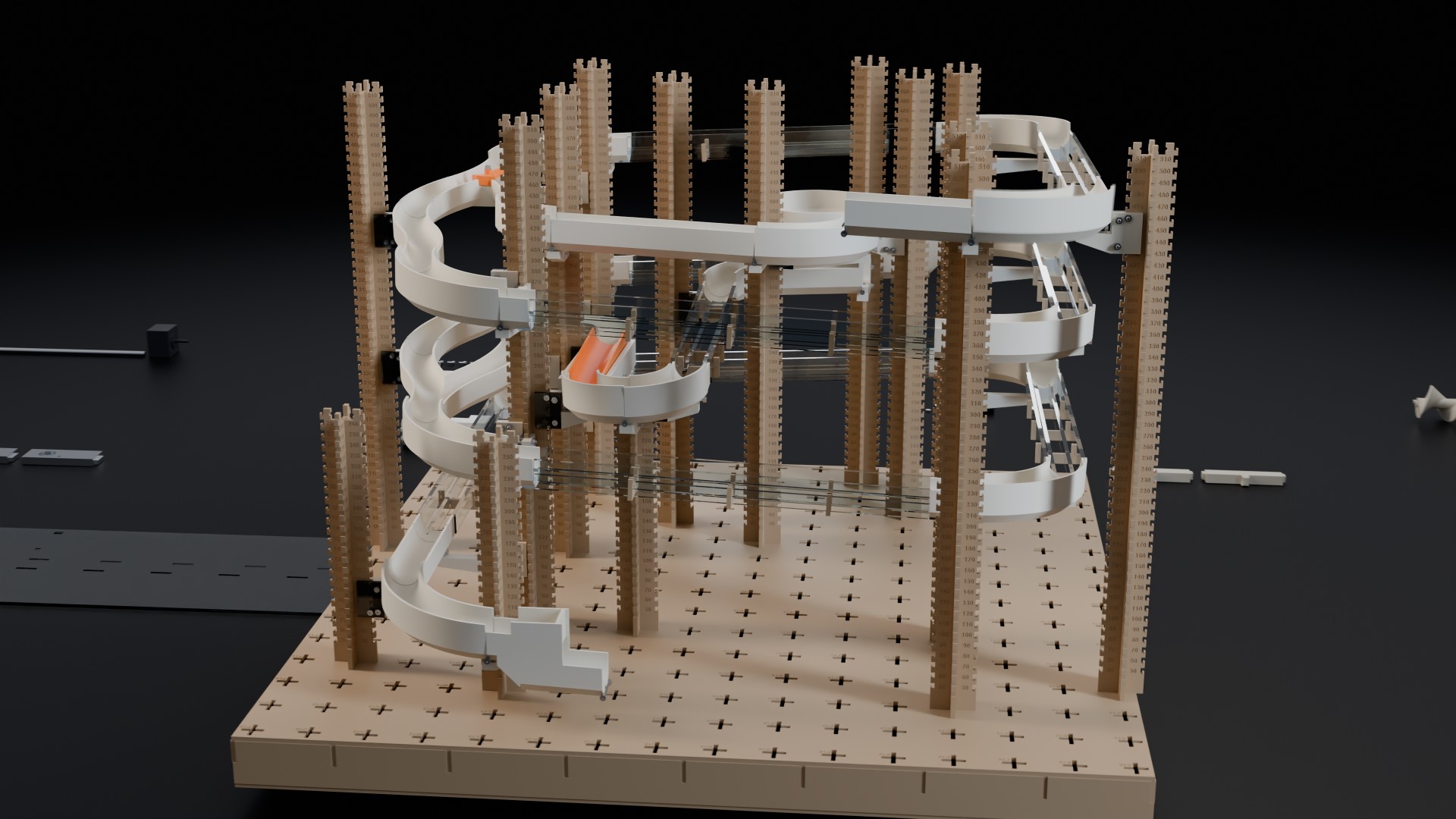
What the rules give you
Want one? Join the waitlist.
Price and launch date go to the list first. One mail a month at most, unsubscribe any time.
We store your address to tell you about the kit. Nothing else. Privacy