Modules
No magic. Every part shows what it does.
32 module types, one grid, one joint. Each page tells what a module does, how it does it, and what it takes to make.
Track
Rail ladders: the marble runs on two edges, not on a floor. Short ones print, long ones come off the laser.
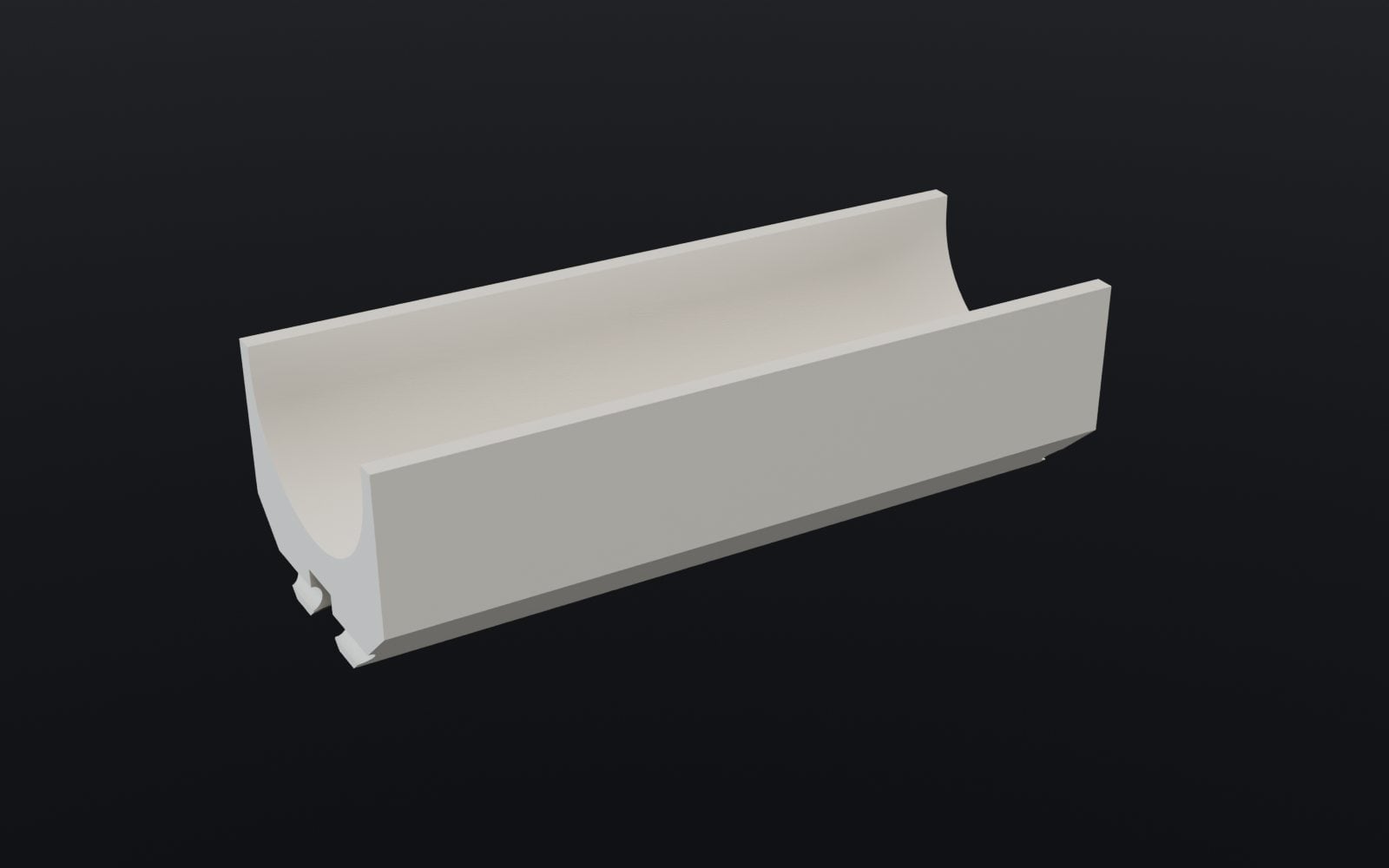 S2 · Short straight Two grid steps of rail ladder. Two printed side walls with rungs carry two acrylic or printed rails; the marble runs on the two rail edges, not on a floor.
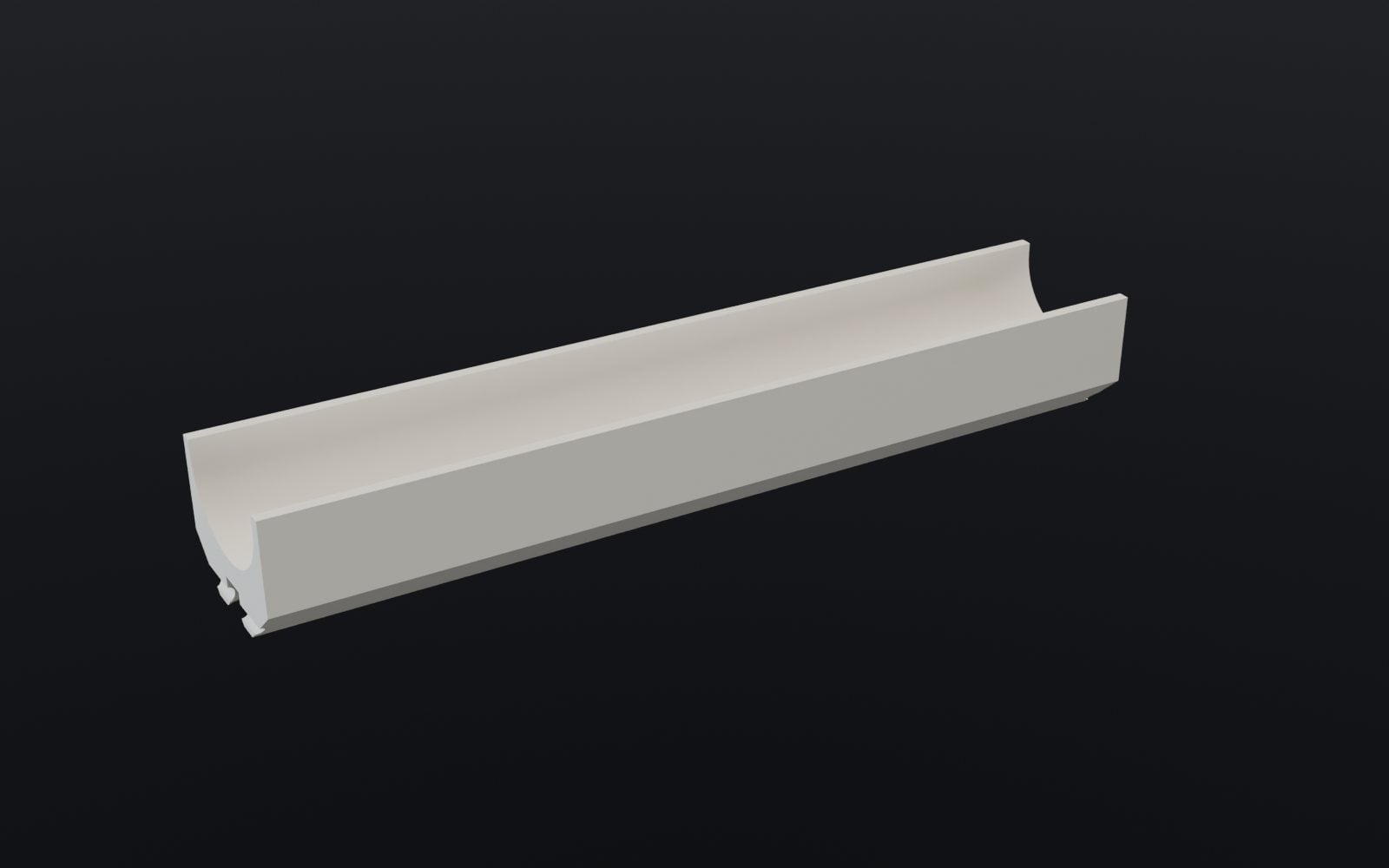 S4 · Straight Four grid steps, the test module for slope. Same rail ladder as S2, twice as long. Used in test series 1 to find the smallest slope on which a marble starts rolling from rest.
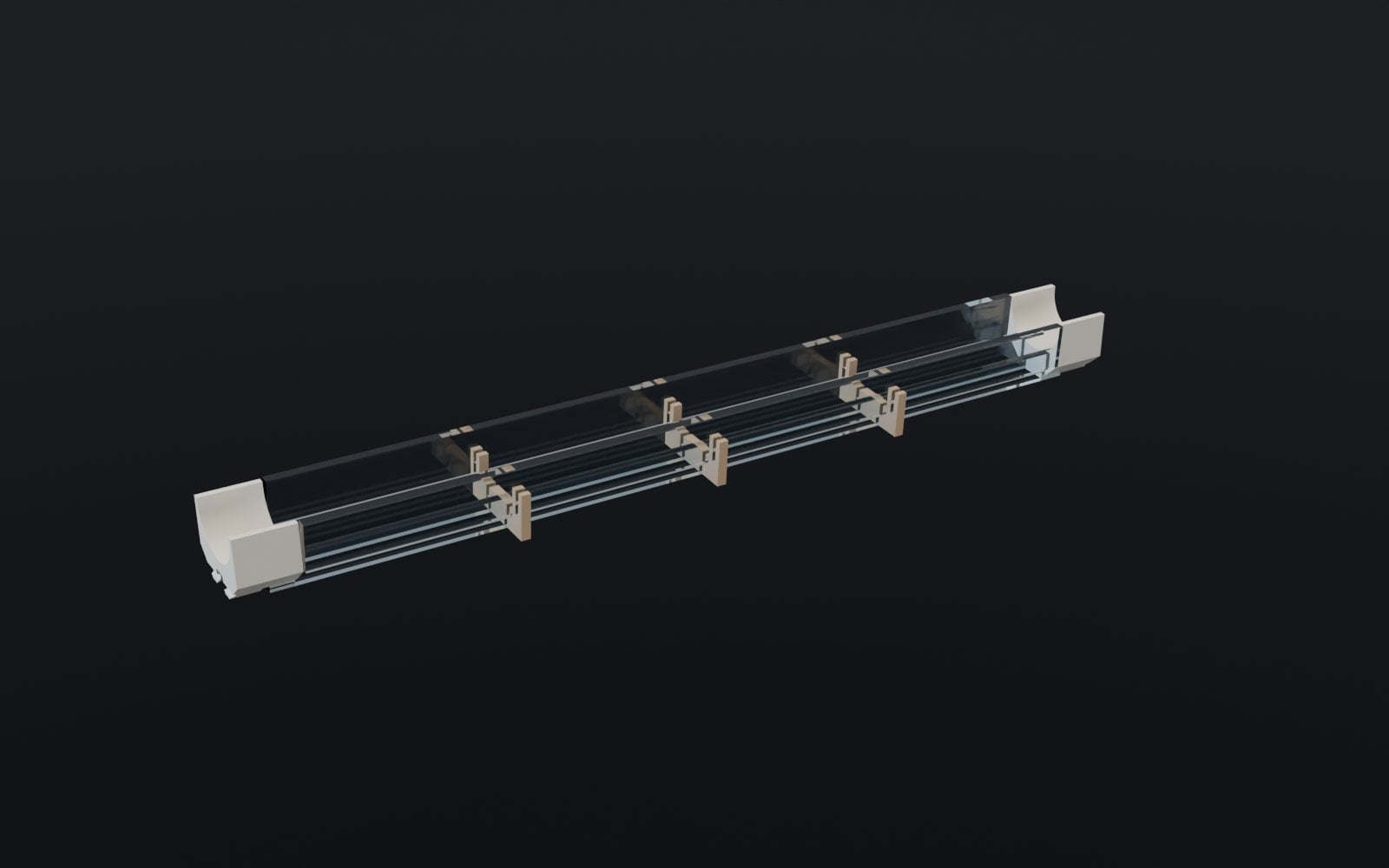 S8 · Long straight Long straights come from the laser, not the printer. Laser-cut MDF side walls slot into printed rungs and end pieces; the rails are two acrylic strips. Eight grid steps in one module.
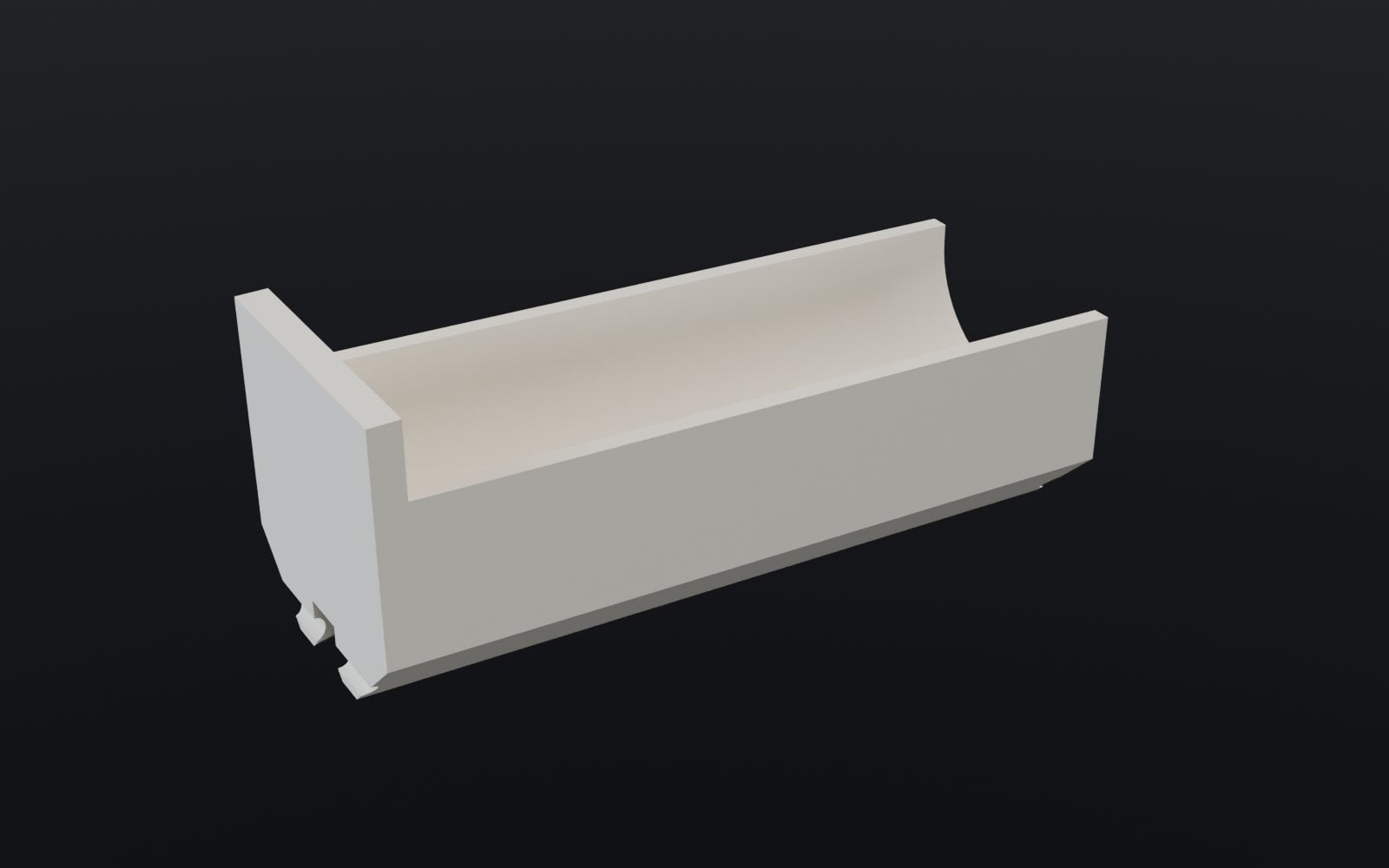 ST · Start and end An S2 with a wall at one end. The start module (ST) holds a marble at rest until the lift takes it; the end module (ZI) stops it. Both are an S2 with a 4 mm end wall.
Curves
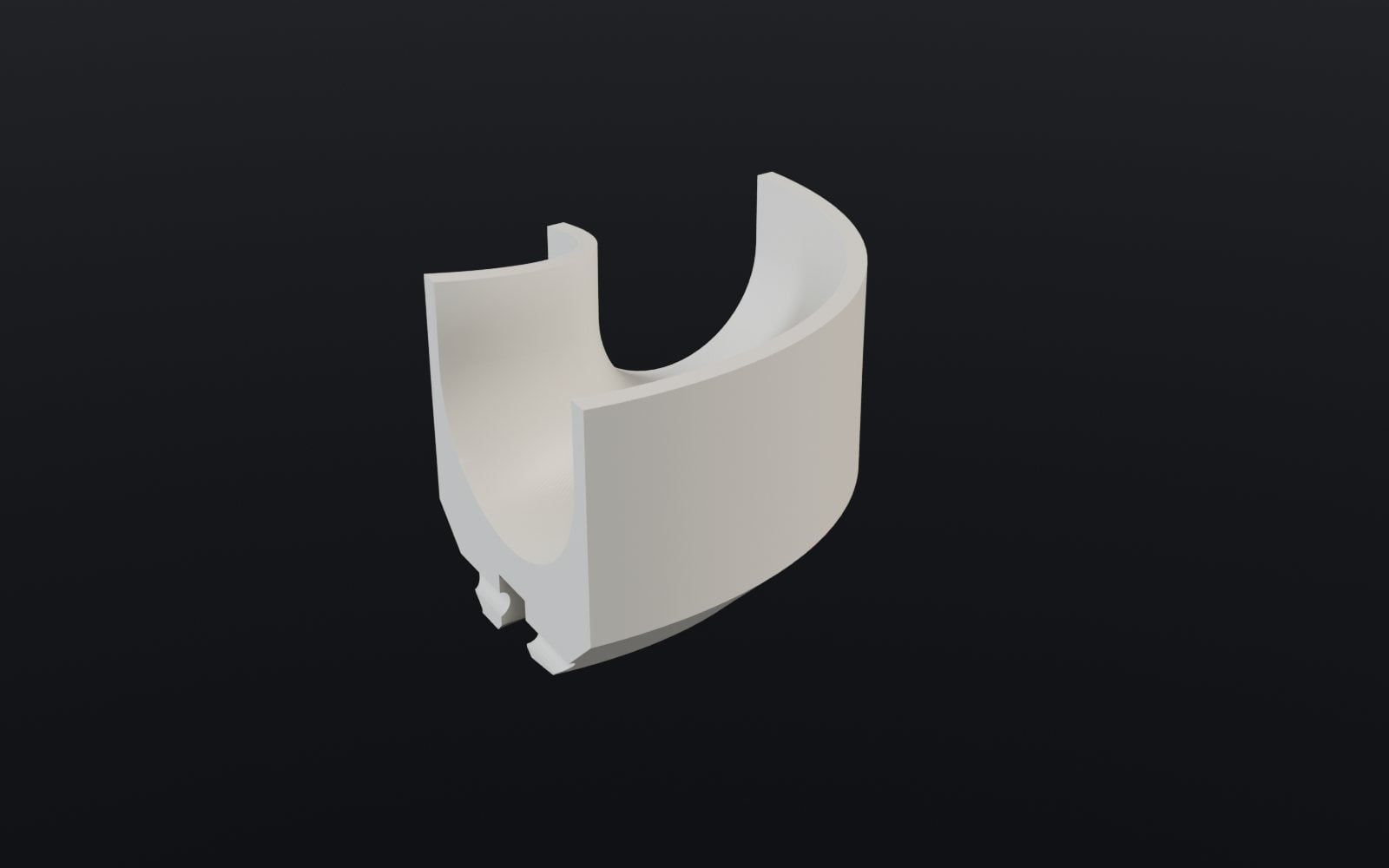
Quarter circles in three radii, left and right. Steeper at the ends so every joint keeps its step.
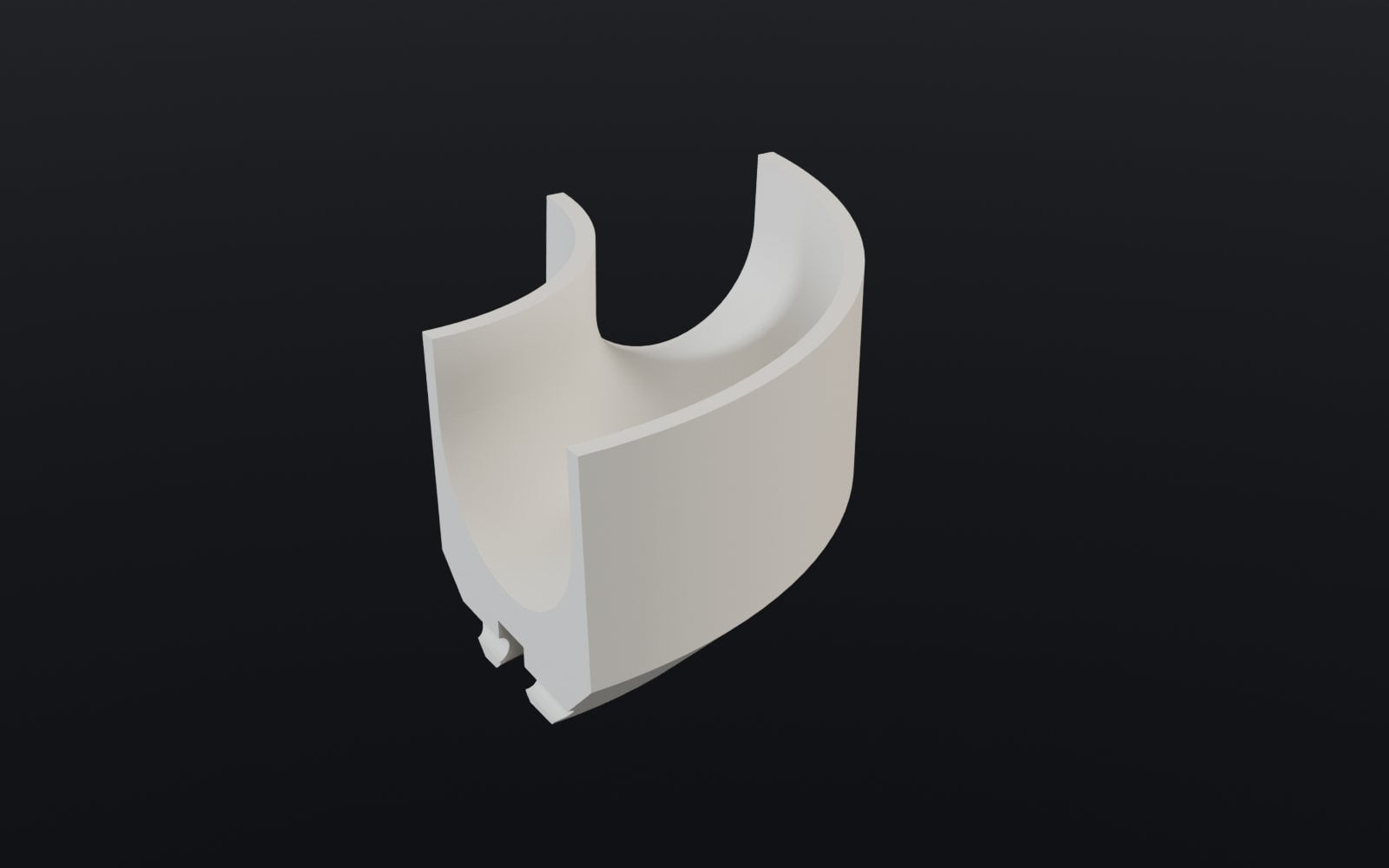 C1L, C1R · Tight quarter curve Turns the track by 90° on one grid step. A quarter circle of 50 mm radius with an upright, slightly banked channel. Left and right versions.
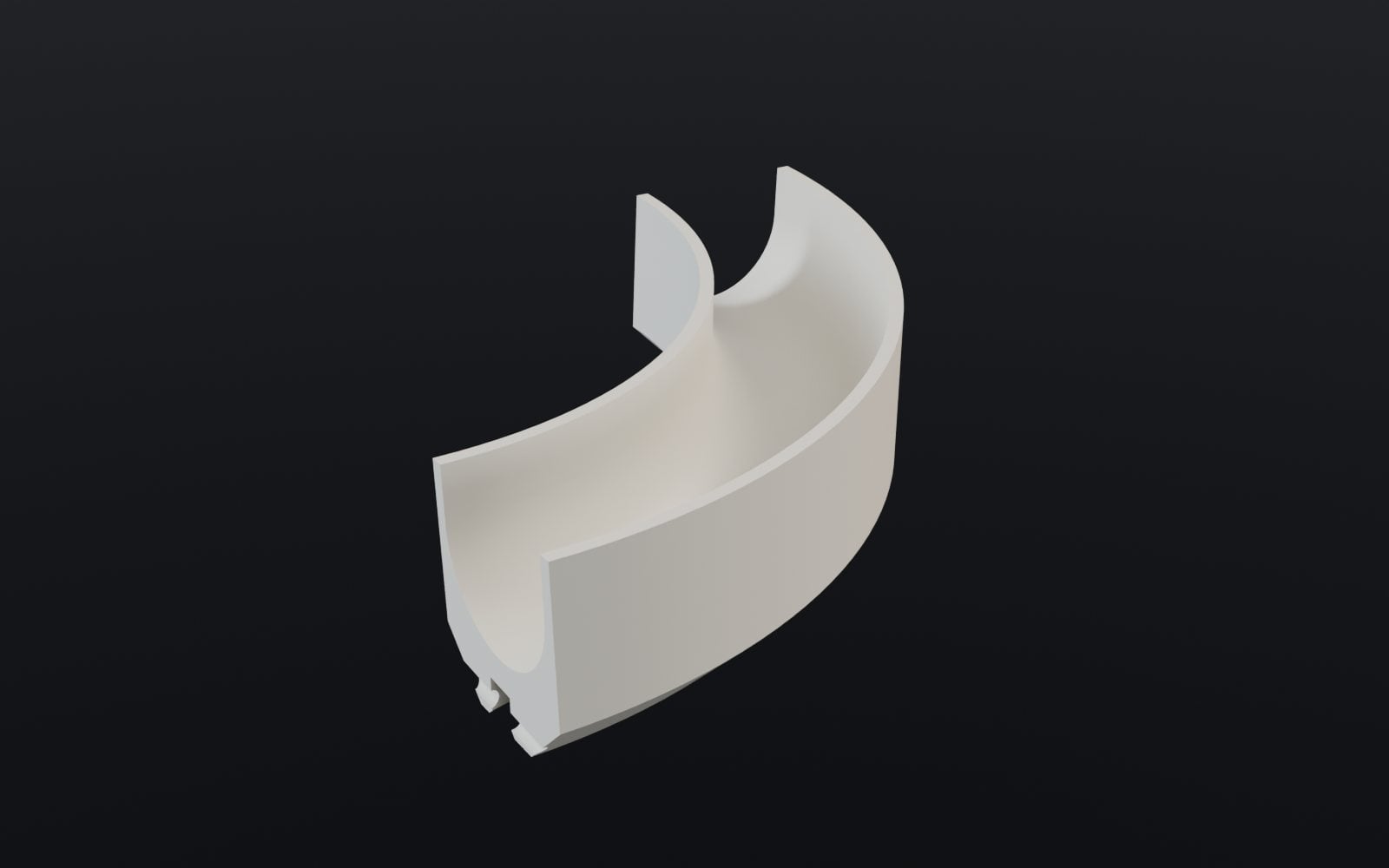 C2L, C2R · Quarter curve Turns the track by 90°. A quarter circle of 100 mm radius, upright cross section, 4.8 % at the ends and 6.8 % in the middle, so the ends line up with the straights.
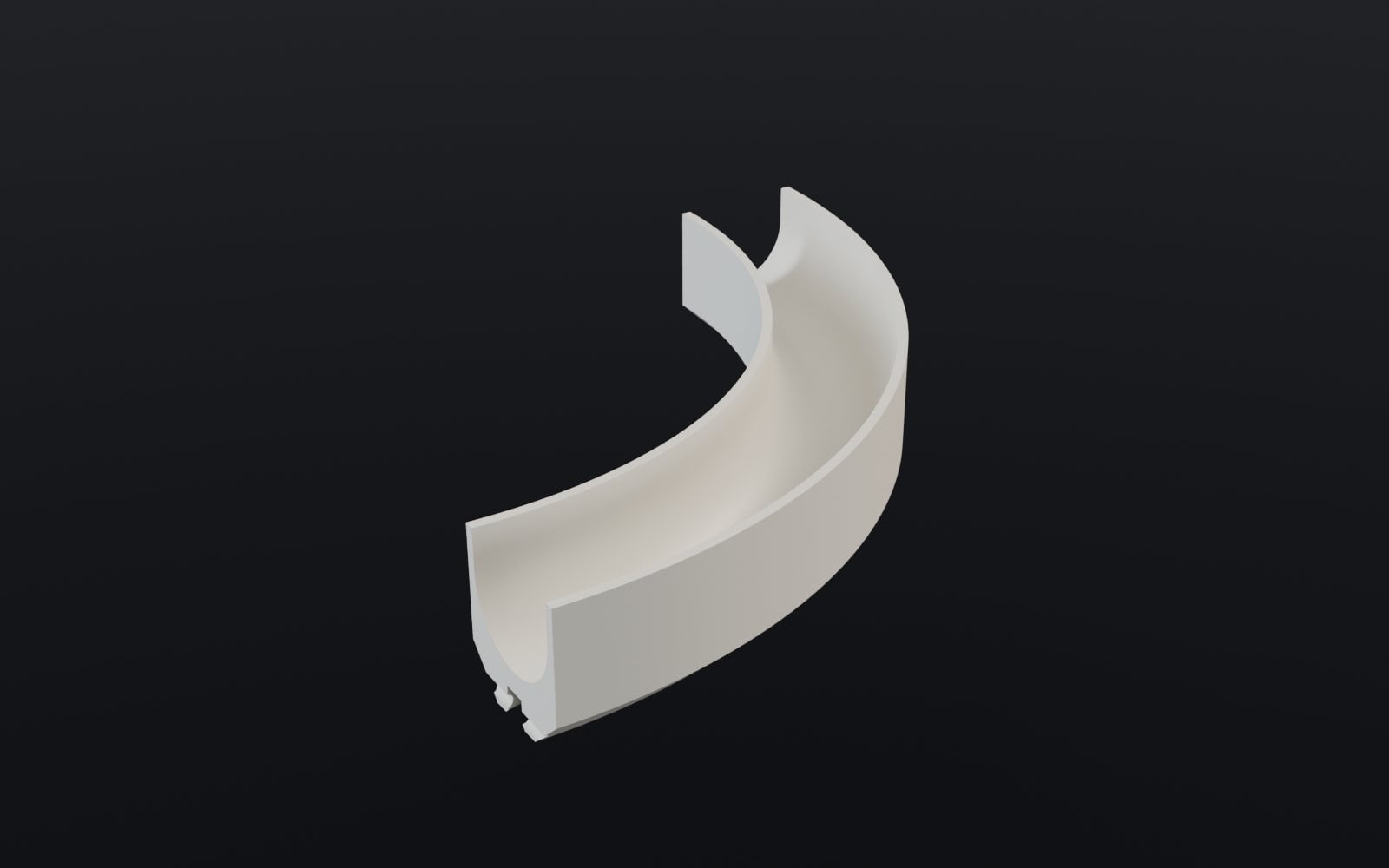 C3L, C3R · Wide quarter curve Turns the track by 90° on three steps, and four of them make the big spiral. A quarter circle of 150 mm radius. Four C3 stacked with the right heights form one full turn of the large spiral.
Spirals
Two full turns on a small footprint. The exit impulse is measured, so the next module can take it.
Switches
A switch without power, a merge with the same body, a lane shift one step sideways.
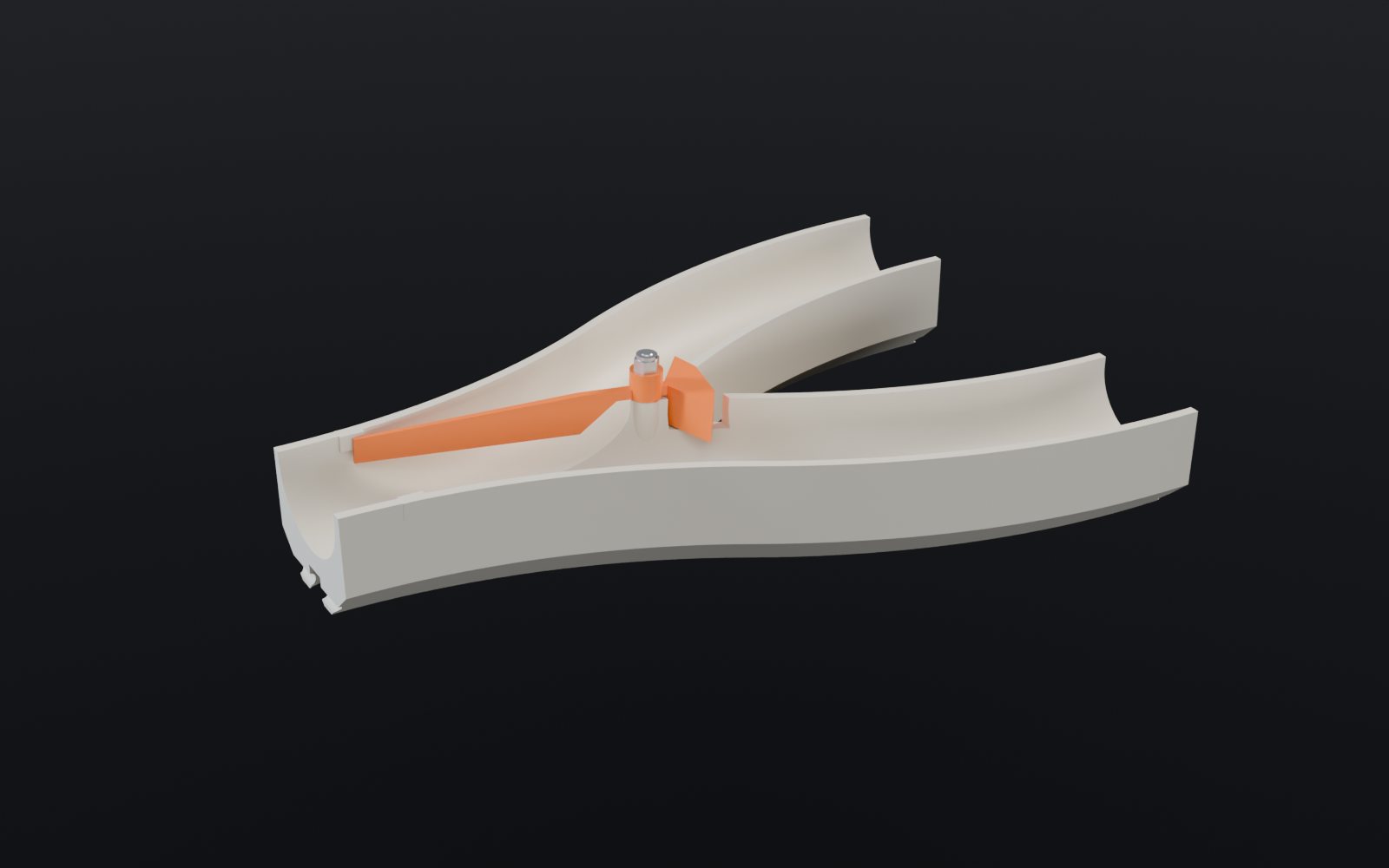 W4 · Switch No power. Each marble flips the tongue. The marble pushes the tongue to one side as it passes and leaves it there. The next marble takes the other lane and pushes it back.
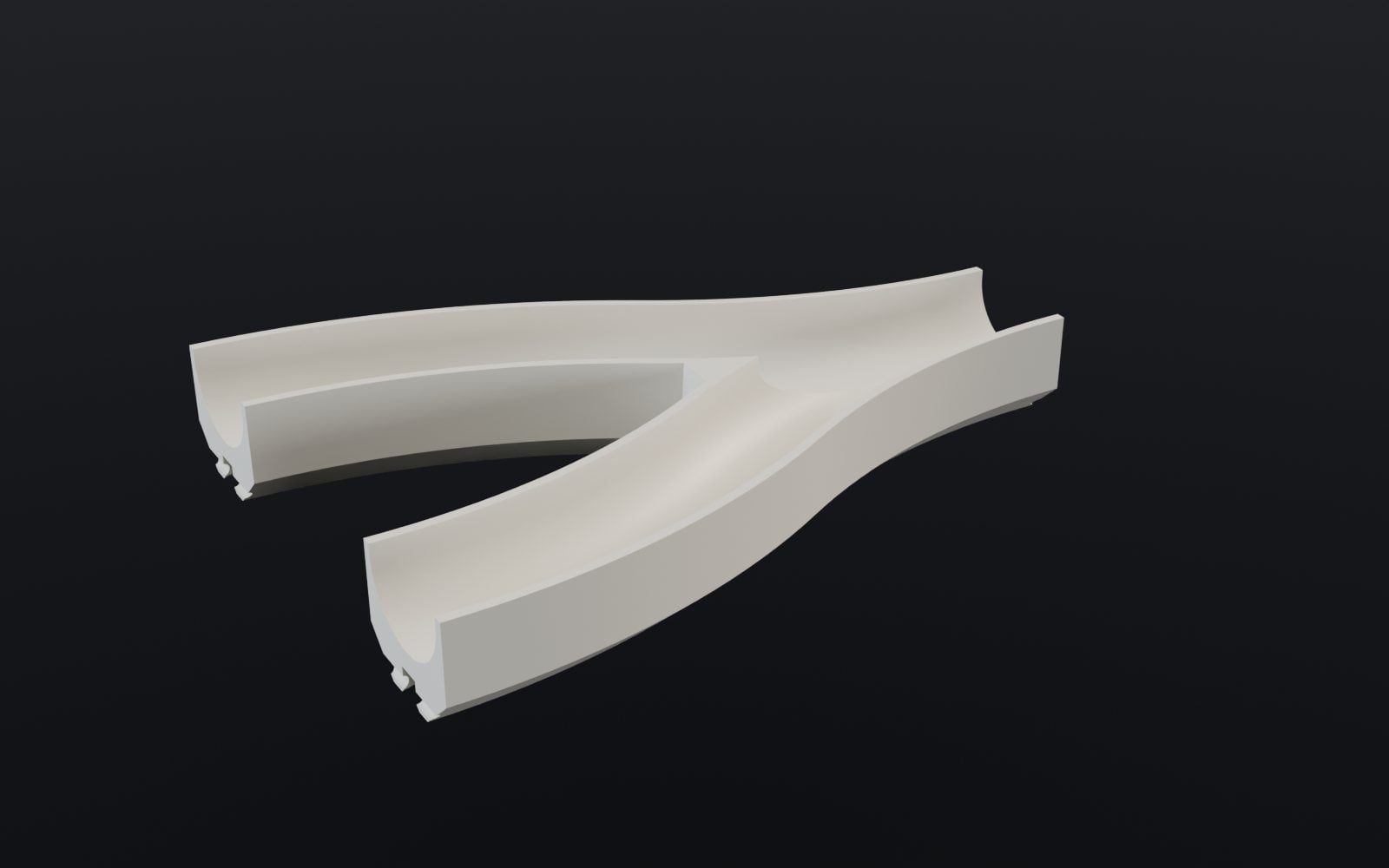 M4 · Merge Same body as W4, just without the tongue. Two lanes come together into one. The marble from either lane drops onto the common floor and rolls on.
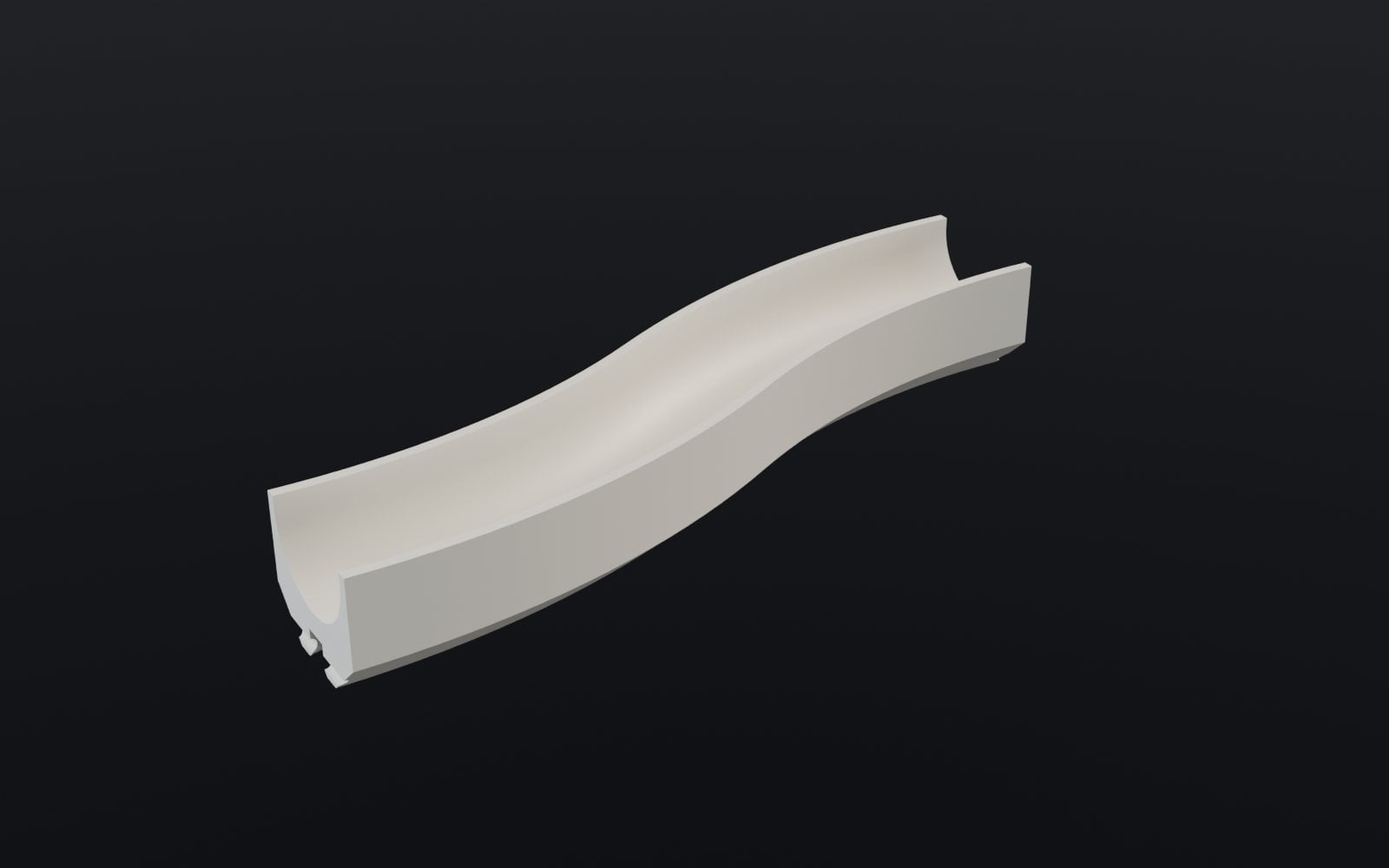 V4L, V4R · Lane shift One grid step sideways, same direction. Two gentle arcs of about 213 mm radius move the track one grid step to the side over four steps.
Features
One physical principle each: circular motion, energy loss, lever, impulse, friction, time measurement.
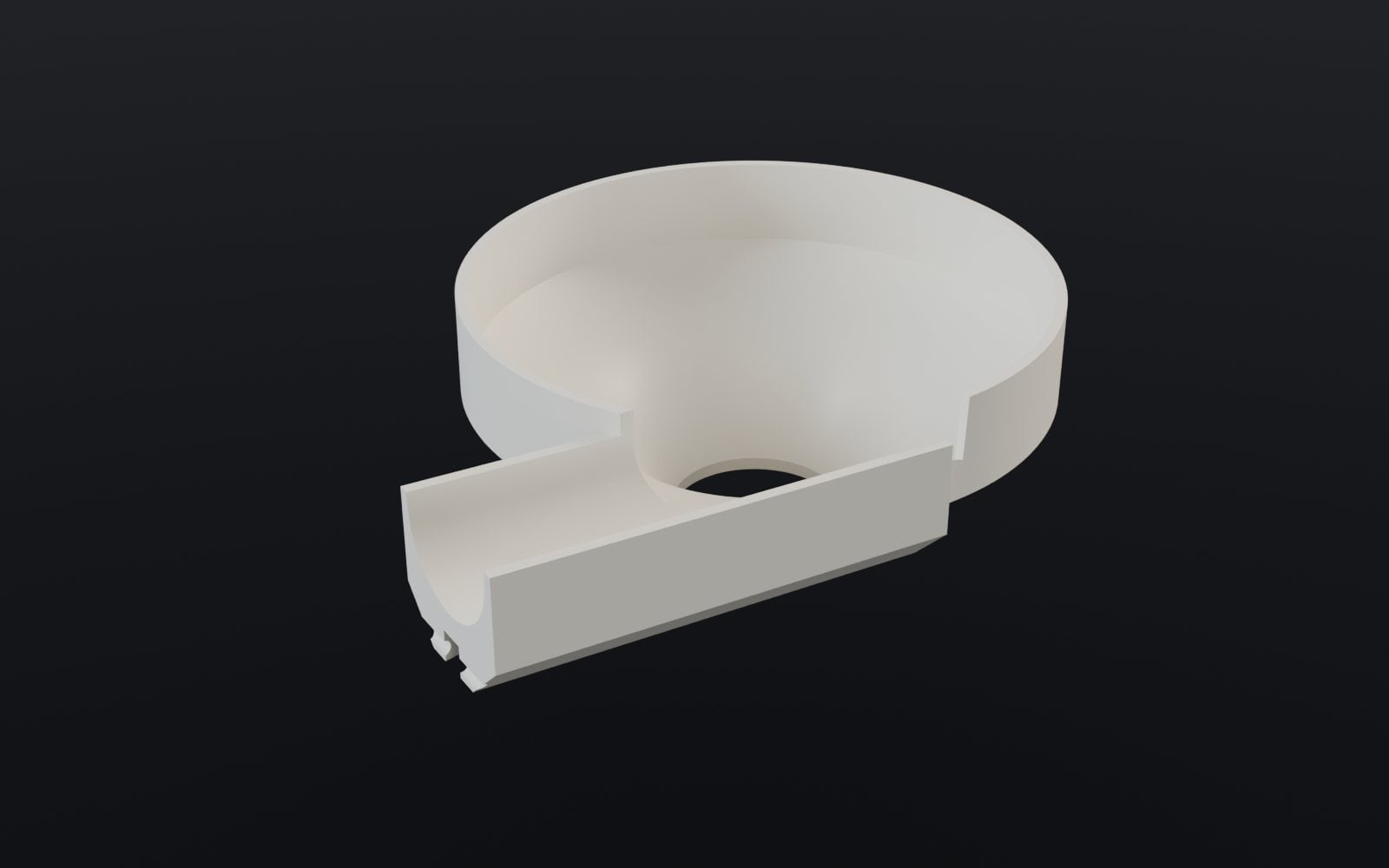 E1 · Funnel · in development The marble circles tighter until it drops. A shallow funnel of 130 mm diameter on three arms. The marble enters tangentially, spirals inward and falls through the 38 mm hole onto the track below.
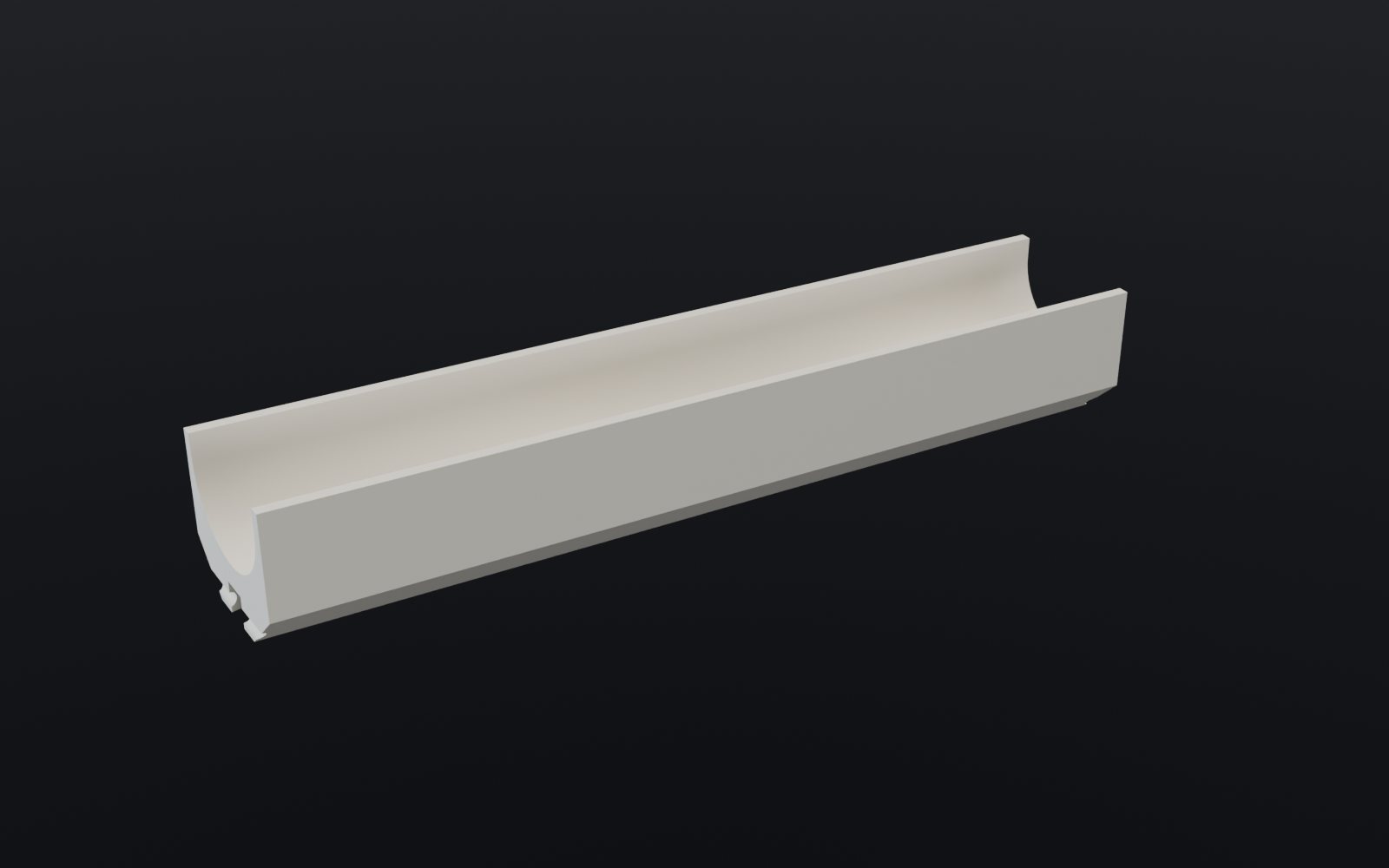 E2 · Wave · in development Two gentle hills in the channel. An S4 whose floor rises and falls twice by 2.5 mm. The marble slows on each crest and speeds up again, the first crest sits just below the entry.
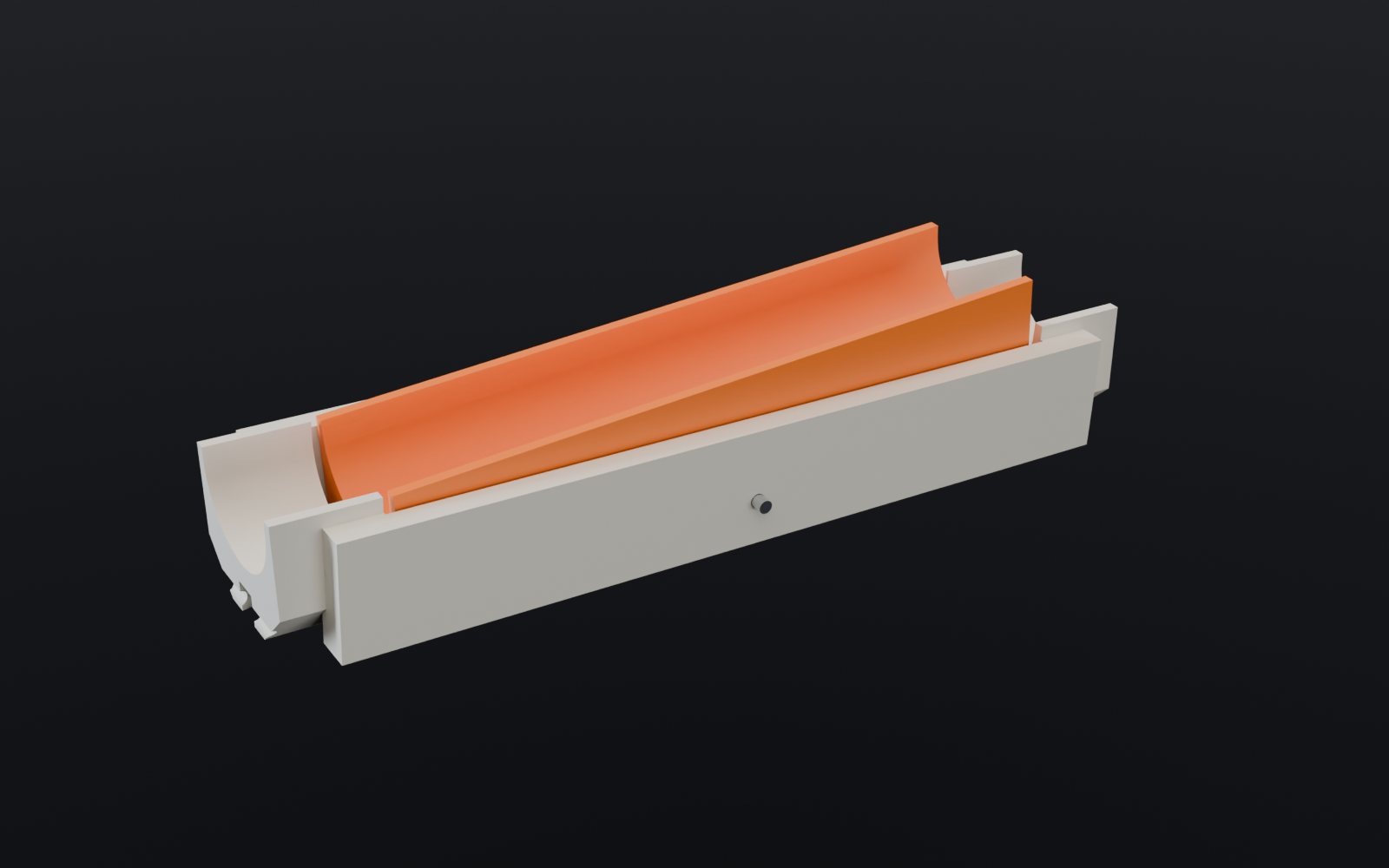 E3 · Seesaw · in development The marble tips the trough and frees itself. A trough on an axle, counterweighted so it rests 3.5 % uphill. The marble rolls in, tips it to 11.8 % downhill and rolls out the far end.
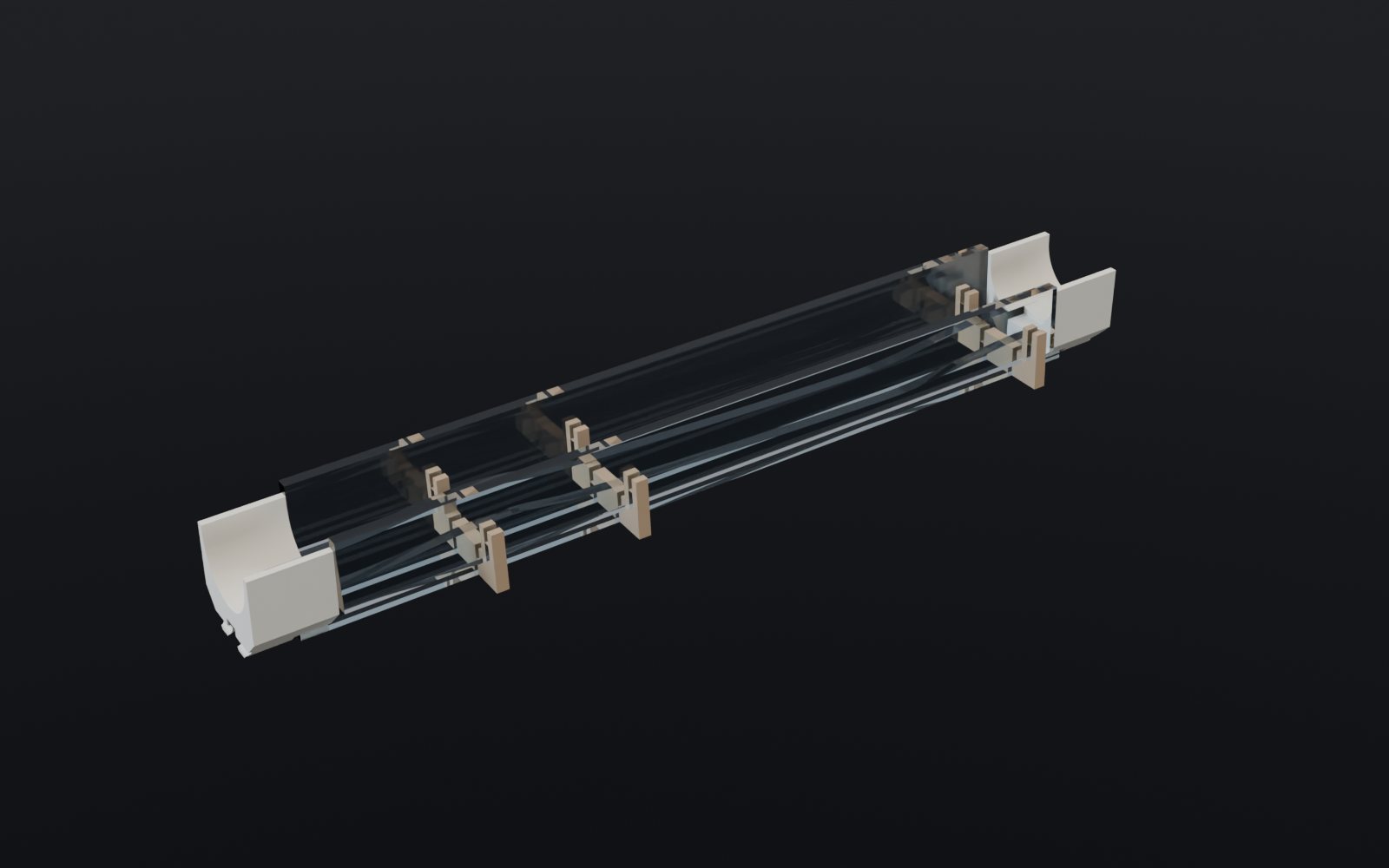 KS6 · Impact row One marble strikes, the front one rolls on. Five marbles rest in a hollow between two acrylic rails. The arriving marble hits the row, the last one leaves over the lip. Ramp, hollow, lip.
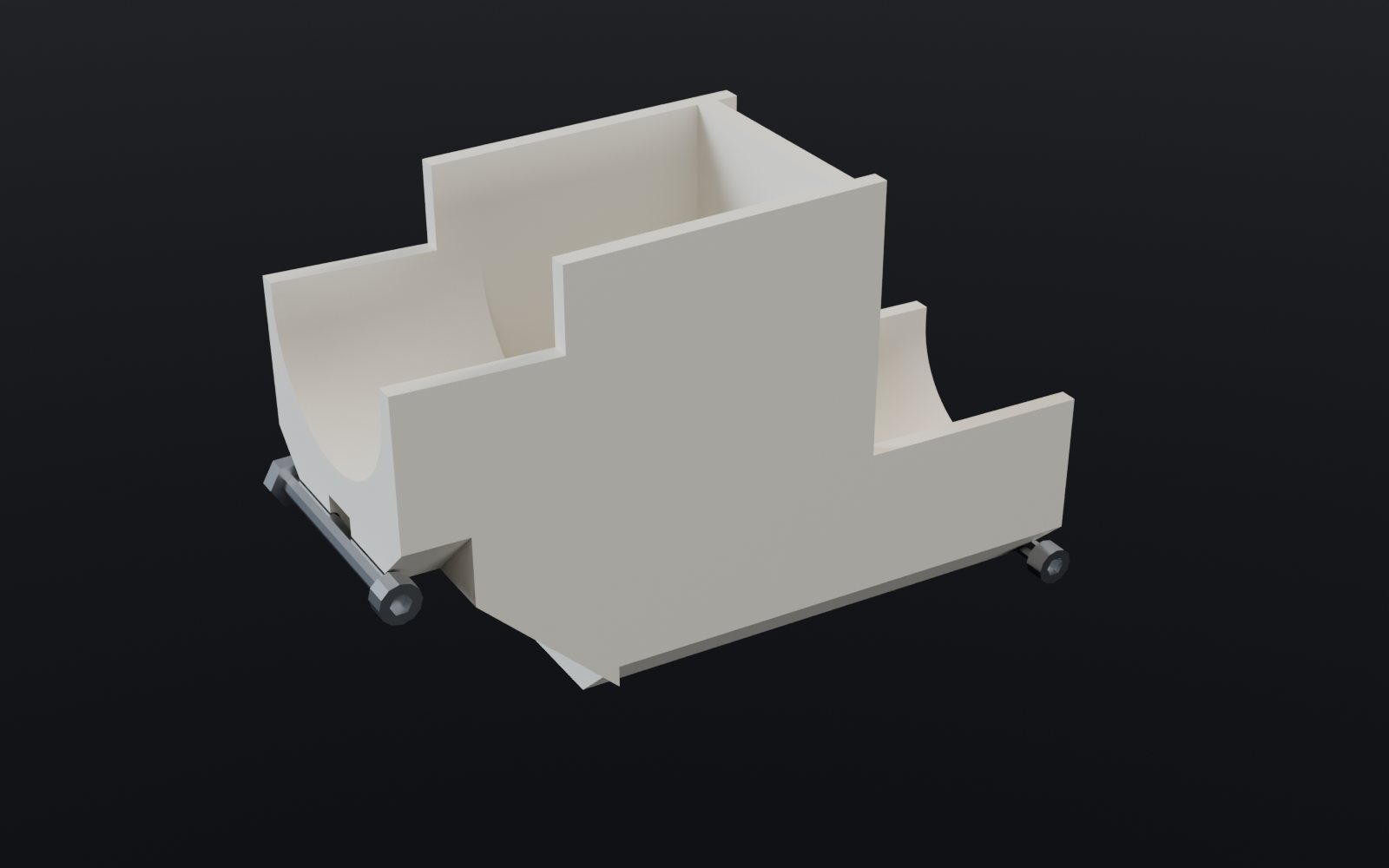 BR2 · Brake Takes the speed out of the marble. A felt-lined shaft of two grid steps. The marble brushes the felt on both sides and leaves slower.
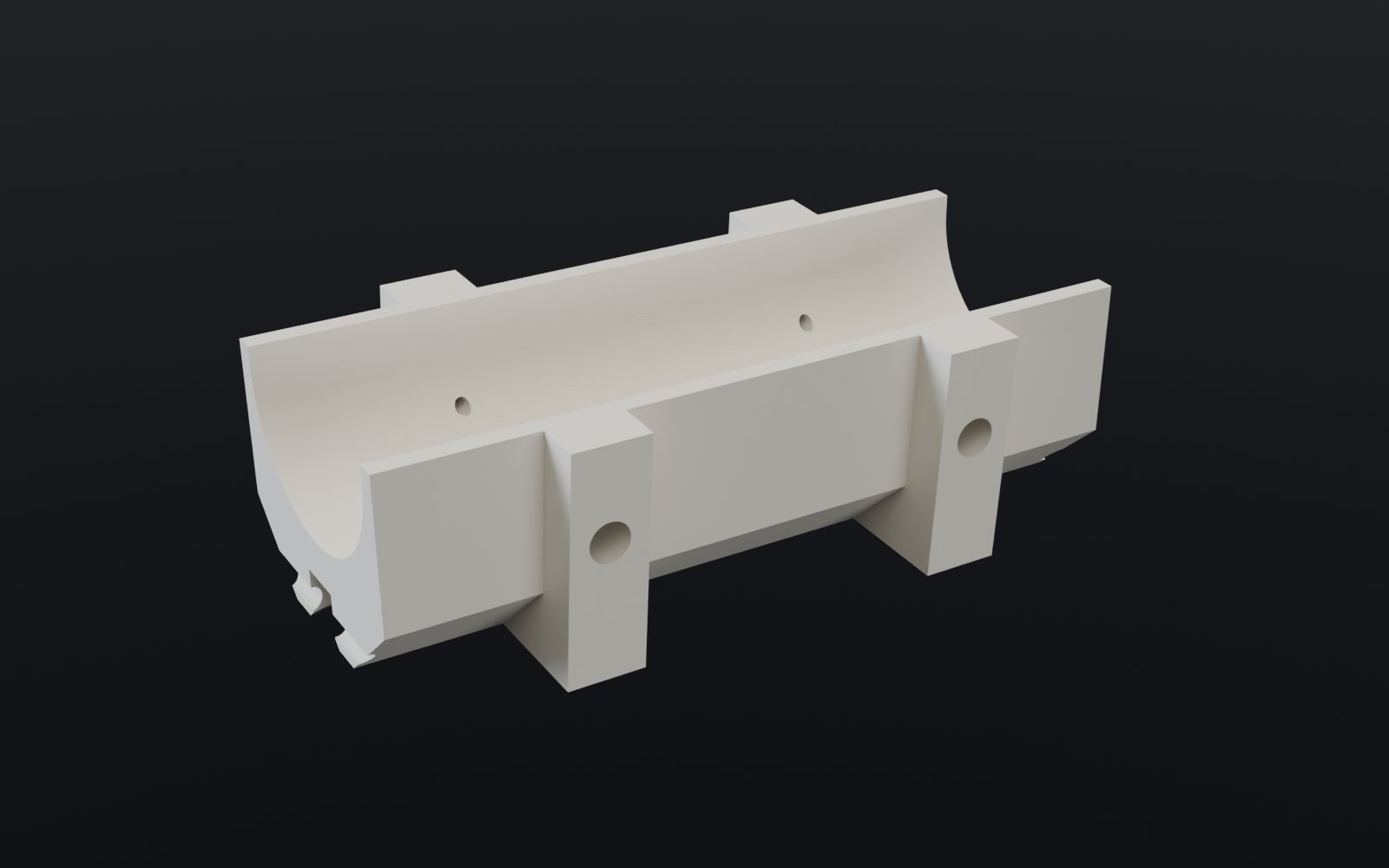 MS2 · Measuring track Two light gates, one number. An S2 with two light barriers 100 mm apart and a small display. It shows the speed of every marble that passes.
Lifts
One motor, three ways up: a screw, a staircase, a ring.
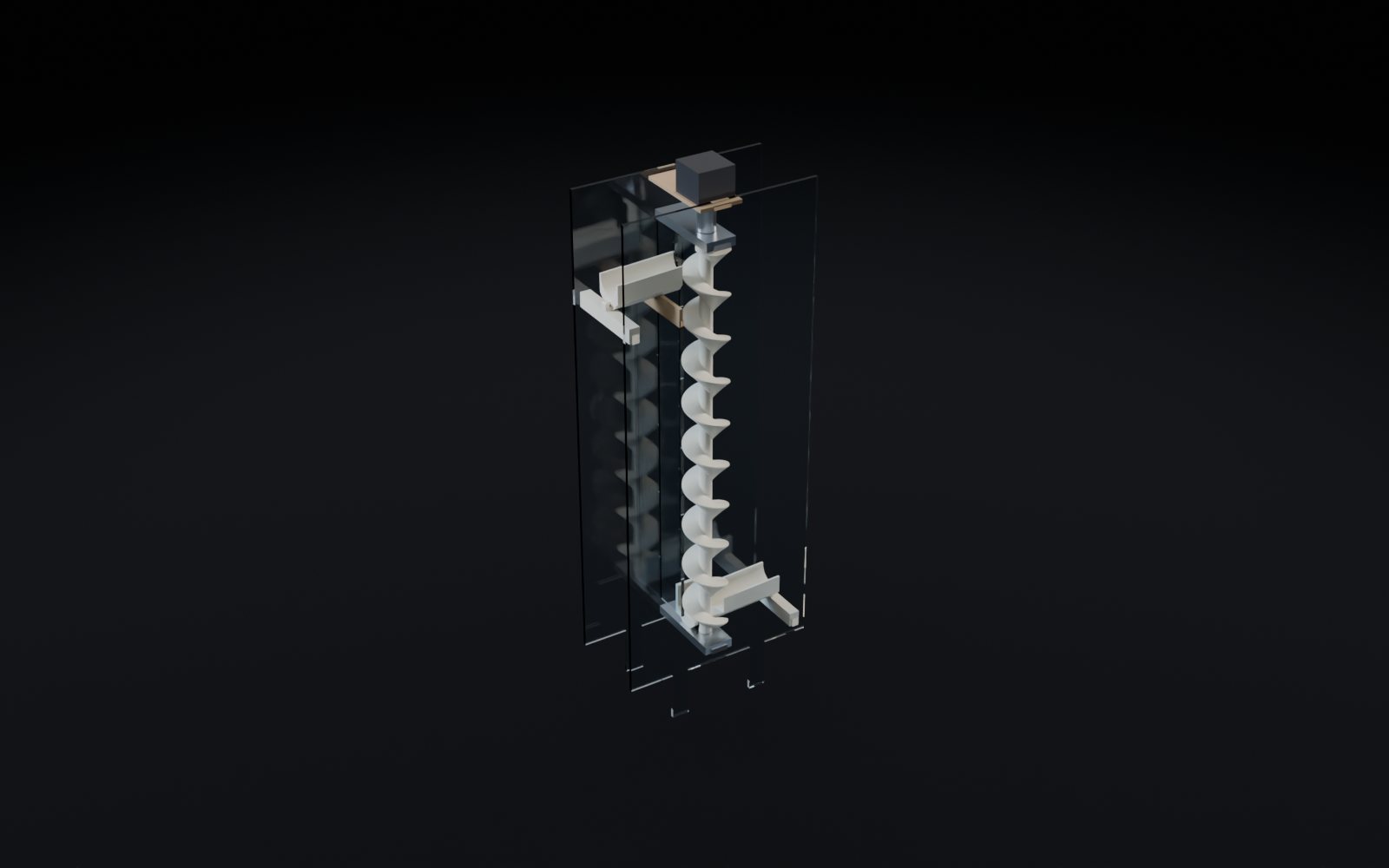 L4 · Screw lift Lifts up to one marble per second, 410 mm high. Three identical printed screw segments on one shaft, turned by one stepper motor. Two acrylic rails guide the marble up the thread.
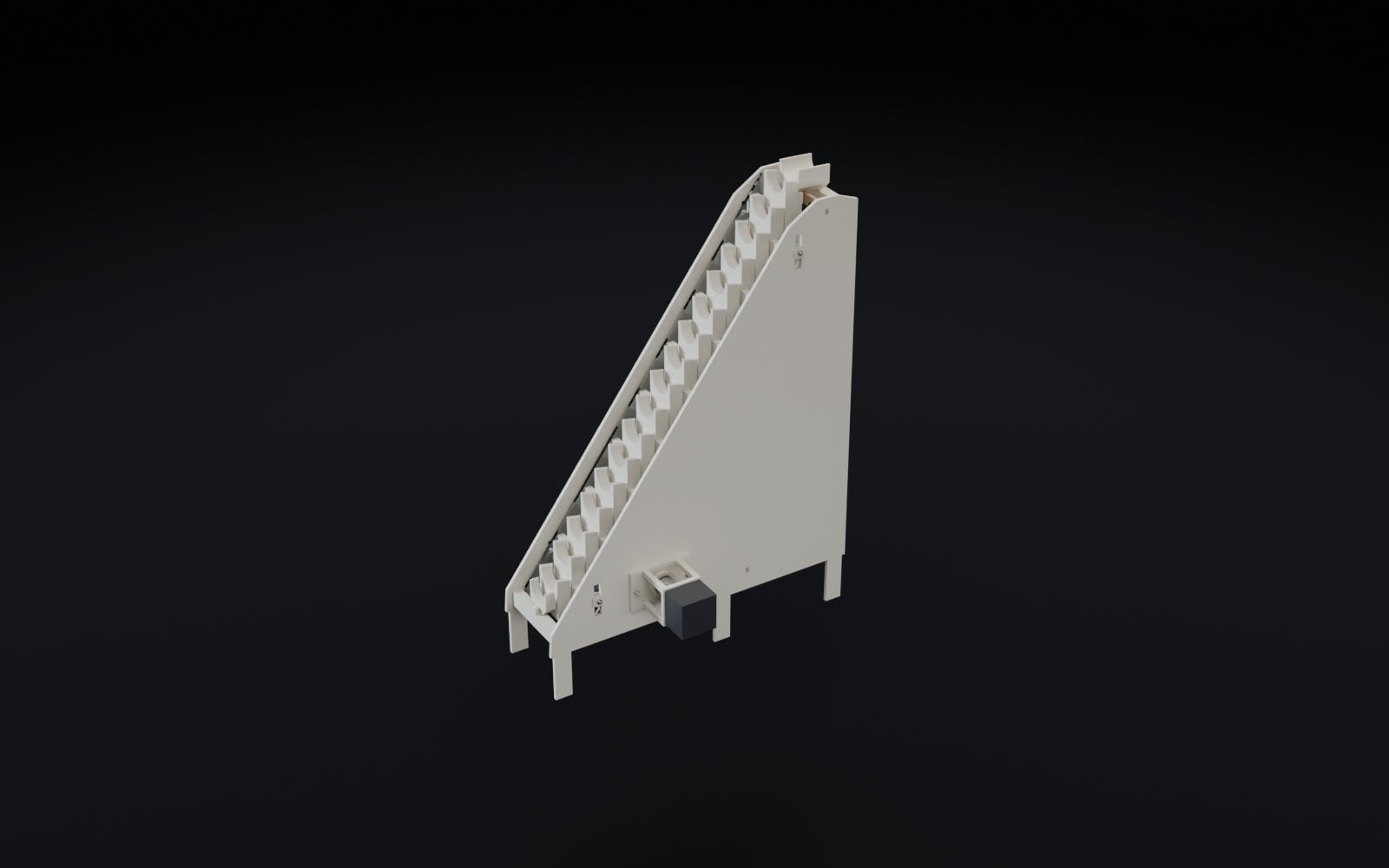 L1_120, L1_270, L1_410 · Stair lift · in development A staircase that walks the marble up. Two sets of steps on MDF cheeks move against each other, driven by a double crank on one 8 mm shaft. Each stroke lifts the marble one step of about 25 mm.
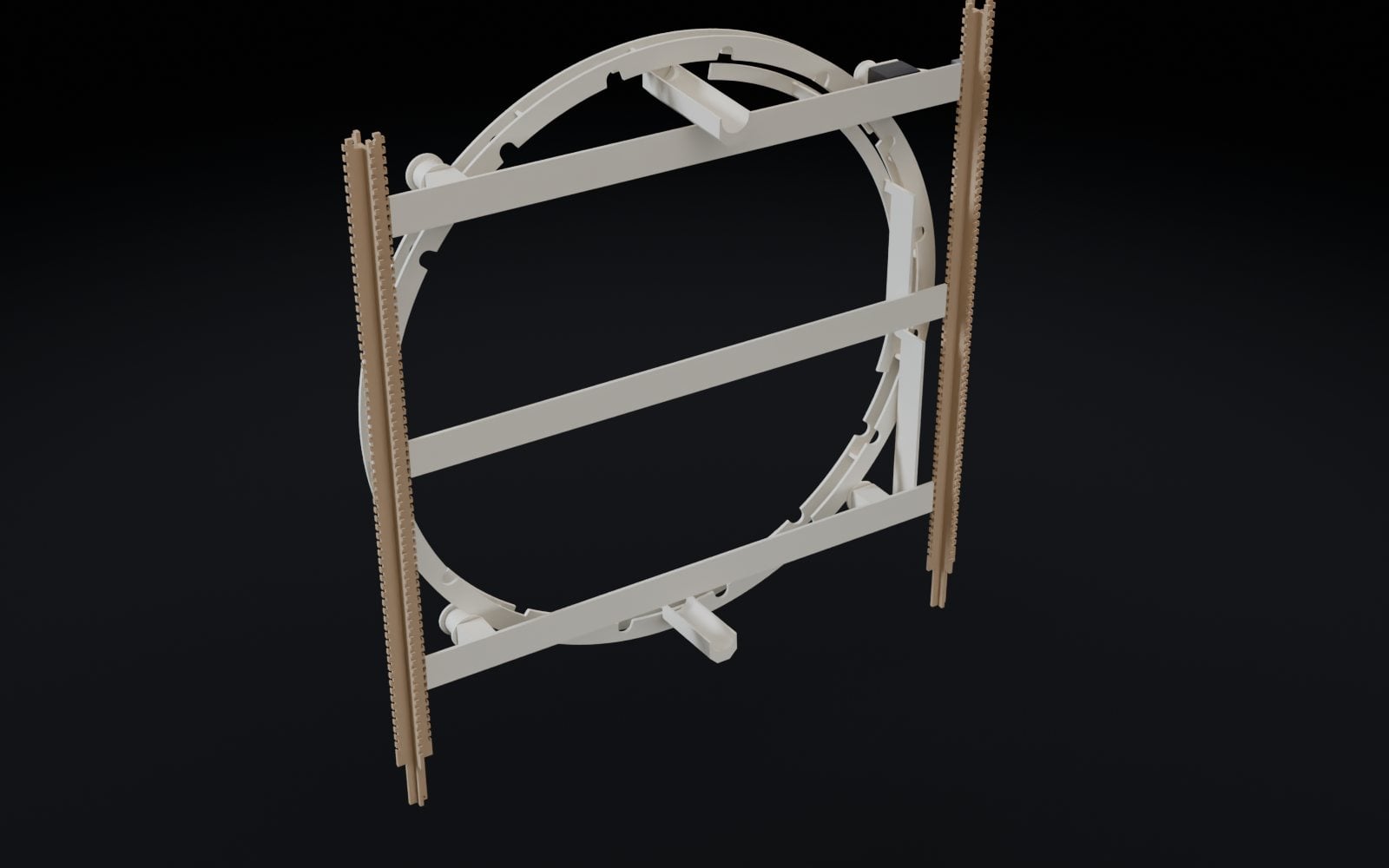 L2A, L2B · Halo · in development A ring from the laser carries the marbles up. A slowly turning ring with pockets, cut from MDF, lifts marbles on its rim and drops them at the top. Two sizes, 478 and 700 mm across.
Structure
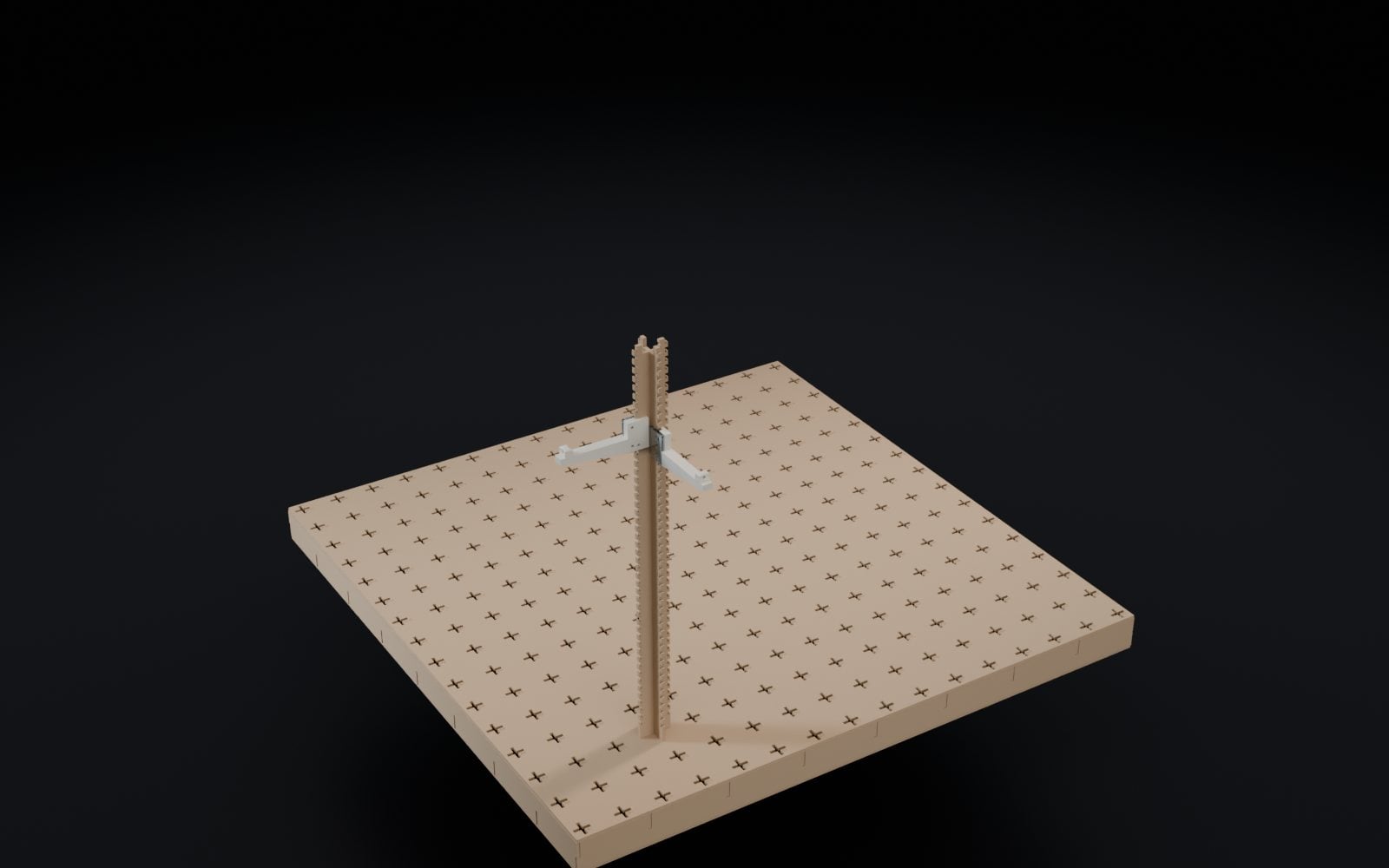
Base plate, posts and arms. The part of the kit that makes everything else a system.
Want one? Join the waitlist.
Price and launch date go to the list first. One mail a month at most, unsubscribe any time.
We store your address to tell you about the kit. Nothing else. Privacy